
How Much Protein Do You Actually Need to Build Muscle?
The quick answer is:
Eat about 0.7 to 1 gram of protein per pound of ideal bodyweight, every day.
Some examples of what that would look like:
140 lb ideal bodyweight: about 100 to 140 g
180 lb ideal bodyweight: about 125 to 180 g
220 lb ideal bodyweight: about 155 to 220 g
The rules:
Get your 1 g per lb of ideal bodyweight in EVERY DAY.
When? I don’t care. Just get it in.
Sources? Just get it in.
We’re going to get into some specifics. But understand this: what’s going to do a hell of a lot more for you than anything else is just getting in enough protein.
We’ll talk about when your body is better at using protein and all that. But at that point, we’re min-maxing. None of it matters if you aren’t getting enough in the first place.
Get in enough first. Then we can worry about the rest.
Why Protein Matters
What’s actually happening when you lift?
You’re putting your muscles under stress. Ideally, you’re pushing them close to the max effort they can handle.
That stress creates a stimulus. It tells your body, “we need to grow and get stronger.”
Yes, some small muscle damage happens too. Your body repairs it. But the damage isn’t the main thing that makes you grow. The effort is.
Working out does NOT build muscle.
Everything after your lift, while you’re recovering, is where the muscle growth happens.
And that’s where protein comes in.
Protein does a lot in your body. It helps make hormones, supports your immune system, and plays a part in tons of other things your body does every day.
But when it comes to muscle, protein is the building material.
The proteins in your muscles are made of smaller pieces called amino acids. When you eat protein, your body breaks it down into amino acids. Then it uses them to repair and build your muscles.
So you need both:
Train hard, but don’t eat enough protein? Your body gets the stimulus but doesn’t have enough to work with.
Eat plenty of protein, but don’t train? Your body has the material but no reason to build.
Training tells your body to grow. Protein is what it grows WITH.
Why 0.7 to 1 Gram?
Where does this number actually come from?
Research.
A big review from 2018 (Morton et al.) looked at 49 studies on protein and lifting. Muscle gains kept going up as people ate more protein, until about 0.7 grams per pound. After that, the extra benefit mostly leveled off.
But that’s an average. For some people, the benefit kept going up to about 1 gram per pound.
So:
0.7 g is where most people get most of the benefit.
1 g covers almost everyone, with some room for error.
That’s why I tell people to aim for 1 g. If you land a little under, you’re still in a good spot.
What’s “ideal bodyweight”?
It’s the weight you’d like to be at. If you’re happy where you are now, just use your current weight.
Why not always use your current weight?
If you’re carrying a lot of extra body fat, your current weight can push your number way higher than you need. Body fat doesn’t need much protein. Muscle does.
Aim for 1 gram. If you land close, you’re doing your job.
Does Timing Matter?
When should you eat your protein?
Whenever it works for you.
Your daily total matters way more than timing. A 2013 review (Schoenfeld et al.) found that once total protein was taken into account, timing didn’t make a real difference. A 2025 review compared eating protein before vs. after workouts and found no difference in muscle gained.
If you’re already hitting your number every day, these can help a little:
Spread it out.
Getting protein in 3 to 5 meals makes your number easier to hit. For most people, that’s about 20 to 40 grams per meal. It doesn’t have to be the same every meal.
Bigger meals aren’t wasted.
You might’ve heard your body can only use 30 grams at once. That’s not true. In a 2023 study (Trommelen et al.), people who had 100 grams after a workout had a bigger muscle-building response that lasted over 12 hours. That doesn’t mean you should eat all your protein at once. It just means a big meal isn’t a waste.
Around your workout.
No need to rush. Your muscles stay more responsive to protein for hours after training. If you ate before your workout, you’re covered. If you trained on an empty stomach, eat a normal meal with protein soon after.
Before bed.
Protein before sleep is an easy way to add protein to your day, and your body uses it overnight. It’s a nice bonus, not a requirement.
Hit your number first. Timing comes second.
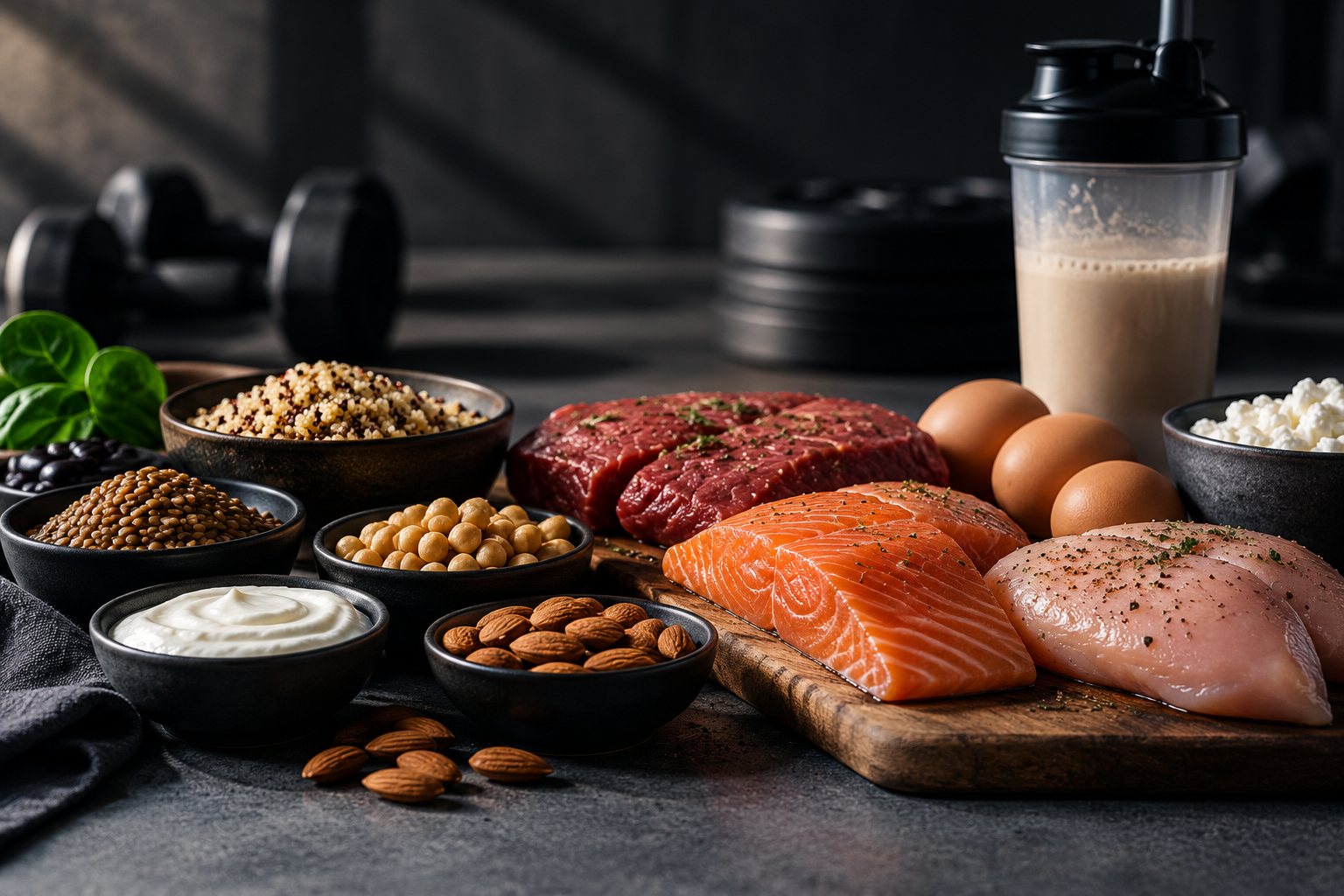
What Does This Look Like in Real Food?
How do you actually hit your number?
Here are some easy sources and about how much protein they have:
Chicken breast (4 oz cooked): about 35 g
Lean ground beef (4 oz cooked): about 28 g
Salmon (4 oz cooked): about 25 g
Canned tuna (1 can): about 25 g
Cottage cheese (1 cup): about 25 g
Greek yogurt (1 cup): about 22 g
Lentils (1 cup cooked): about 18 g
Eggs (1 large): about 6 g
Always check the label. Brands and portions vary.
Whole food or shakes?
From a purely muscle-building point of view, I don’t care where your protein comes from. Just get in the amount you need.
Now, I’m going to backtrack a little.
I do believe you should do your best to get most of your protein from whole foods instead of supplements.
Once we look past muscle building and start thinking about your health, all the extra nutrients you get from whole foods matter. I don’t want you to neglect that.
But if you find it hard to fit enough meals in, or you need 200+ grams of protein a day, shakes can take a lot of that burden off.
The point I’m driving home is this:
Getting enough protein in is the biggest needle mover.
Common Mistakes
1. Thinking more is always better.
Protein has diminishing returns. The more you eat, the less extra benefit each gram gives you. Research shows the benefit starts leveling off around 0.7 grams per pound, and by about 1 gram per pound it plateaus. Past that, eating more won’t build extra muscle. It’s just extra calories.
2. Guessing instead of knowing.
Most of the clients I work with aren’t eating nearly enough protein when they start.
When I have them track what they normally eat, then show them where they need to be, they’re always shocked.
Unless you’re actively paying attention to it, you’re probably not as close as you think.
3. All or nothing.
Missing your number one day doesn’t erase your progress. Muscle is built over weeks and months, not one day. Get back on track at your next meal.
Consistency beats perfection. Every time.
Quick Questions
Do I need as much protein on rest days?
Yes. Rest days are when your body is recovering, and that’s when the muscle gets built. Keep hitting your number.
What if I’m trying to lose fat?
Protein is even more important here. When you’re eating less, protein helps you hold onto the muscle you have. Just know that building new muscle gets harder the bigger your calorie deficit is.
Is this much protein safe?
For healthy people, yes. If you have kidney problems or any other health condition, check with your doctor before raising your protein.
Do I need more as I get older?
Older adults can benefit from more protein, not less. The range in this article already covers you.
The Bottom Line
So, how much protein do you actually need?
About 0.7 to 1 gram per pound of ideal bodyweight. Every day.
Don’t stress about timing.
Don’t stress about being perfect.
Don’t stress about where it comes from.
Just get it in.
Train hard. Recover. Eat enough protein. Then do it again.
That’s what builds muscle over time.
If you want more like this, join the DruFit email list.
Enough protein, every day. Start there.
