
How to squat - guide on form and technique
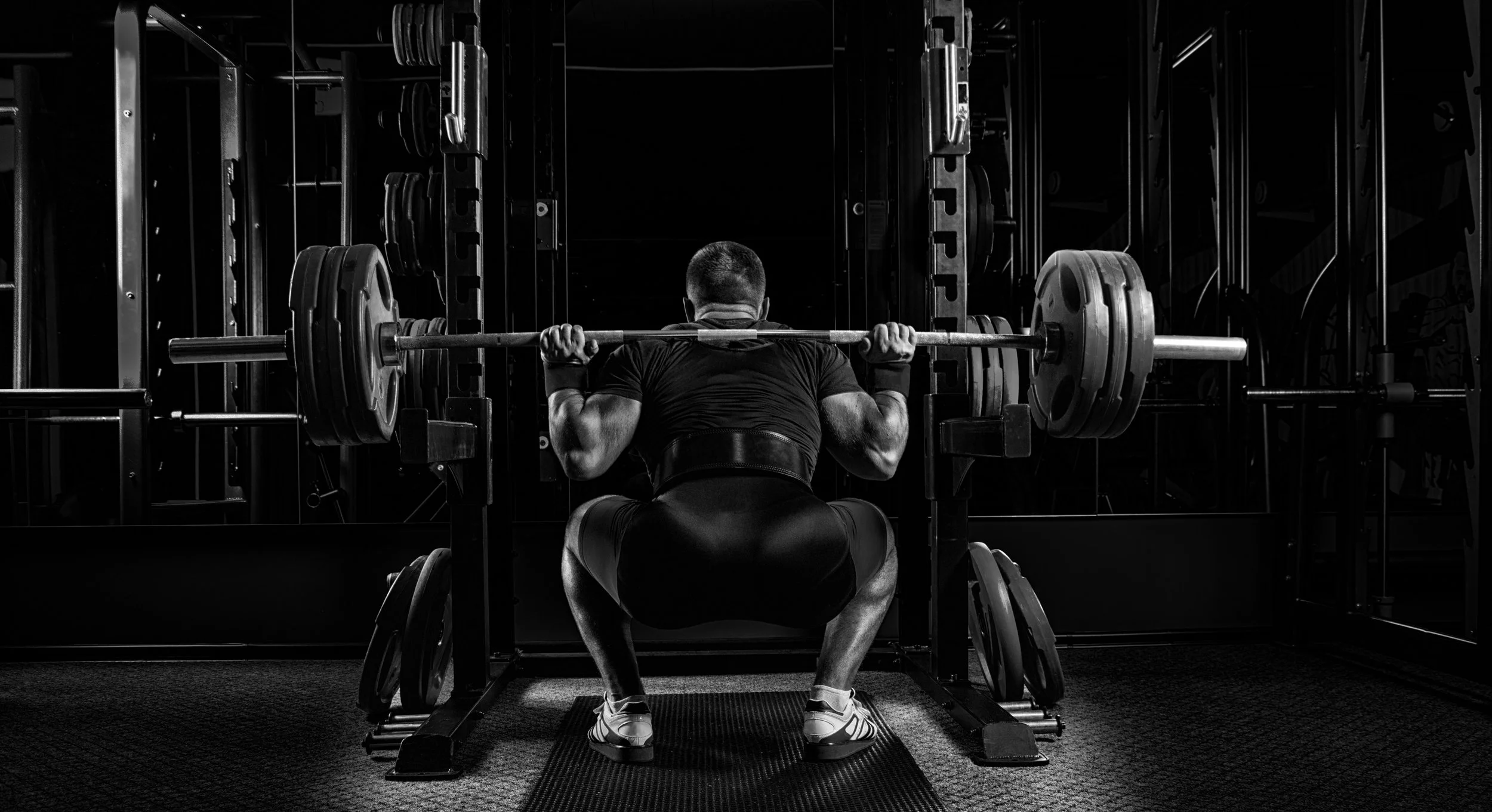
Today we are going to cover proper squat technique. Whether you are doing a low bar, high bar, front squat, goblet squat, or any other variation, the fundamental movement is the same. For this article we are going to use the low bar squat as our primary teaching tool and then cover the key positioning differences for high bar and front squats. Everything covered here applies to any variation you choose to do. Let's get into it.
Stance
Let's start with your stance. Everyone is going to squat a little differently and that is completely fine. Just because you saw someone else squat a certain way does not mean that is the right answer for you. The right squat stance is the one that works for your body.
Here is a guideline to start from. Your ideal stance width is going to depend heavily on your femur length relative to your torso. If you have long femurs and a short torso a wider stance is going to feel more natural and comfortable. If you have short femurs and a longer torso a narrower stance closer to shoulder width will likely feel better. If your proportions are more balanced then somewhere around hip width is a good starting point. Your hip structure and the muscles surrounding your hip joint also play a role. Start with the guideline and then move your stance around until you find a width that feels right for you.
Hip Position and External Rotation
Once you have found your stance the next step is getting the most out of your hip mobility. First point your toes out slightly. If you are standing on a clock think of your feet pointing toward 11 and 1. Not too far out, just a slight angle.
Next, and this is important, you want to externally rotate your femurs. The way I like to cue this is once your feet are set, without letting them move, think about externally rotating your knees. This activates your glutes and creates room for your hips to sit into the bottom position. Once your feet are set and your knees are externally rotated just sit into the squat.
One thing to stay conscious of is maintaining that external rotation throughout the entire movement. Especially if this is a new concept for you it is very easy to let the knees cave in and lose that rotation as you fatigue. Keep that outward pressure the whole way down and the whole way up.
Low Bar Squat
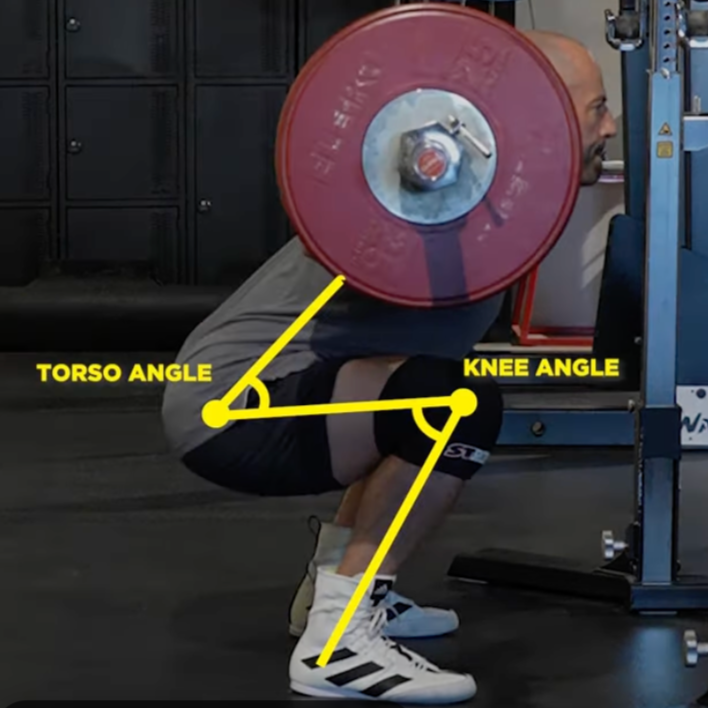
The low bar squat is the variation most people are familiar with and the one where you will be able to move the most weight. When you get under the bar the first thing you want to do is create a shelf for it to sit on. Bring your hands in as close to your body as your shoulder mobility allows. The bar is going to sit on your rear deltoids. Think about resting the bar on soft tissue not on bone. Any lower than on your posterior deltoids and the weight is going to push your torso too far forward and completely change the mechanics of the lift.
Once the bar is in position pull your elbows back and drive your shoulder blades down. This creates tension and rigidity through your upper back which is what stabilizes your spine throughout the movement. Looking straight ahead unrack the weight and take your steps back into your stance.
Before you move anything take a big breath and brace your core. Then initiate the squat by externally rotating your knees and sitting down into the movement. The goal is to squat as deep as your mobility allows while maintaining a neutral pelvis and a neutral spine. That depth is going to look different for everyone. Do not chase a depth your mobility cannot support. Go as deep as you can with your pelvis staying neutral and build from there.
High Bar Squat
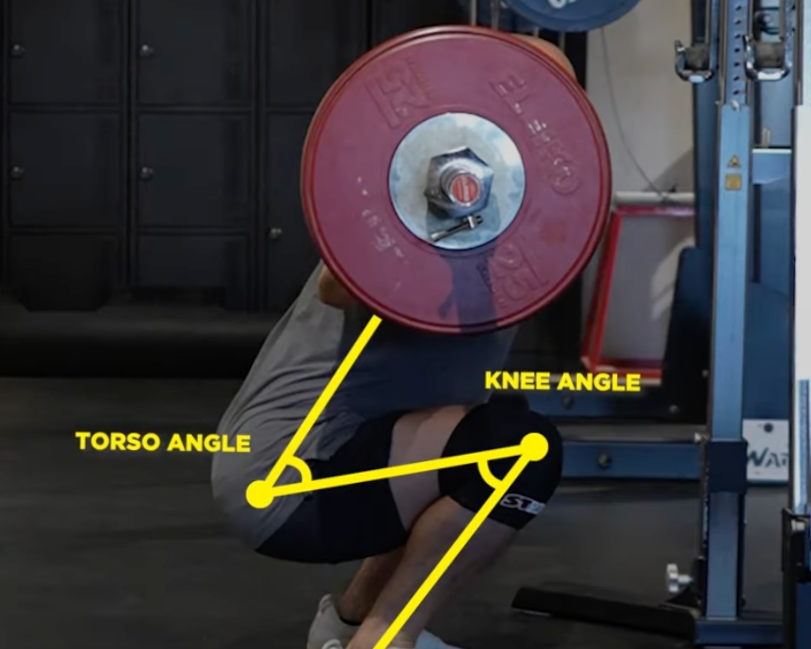
The high bar squat is very similar to the low bar but there are two key differences worth understanding, where the bar sits and how that changes the demand on your body.
The high bar is a more quad dominant movement compared to the low bar. Because the bar sits higher your torso stays more upright which shifts more of the demand onto your quads. The low bar position naturally pushes your torso forward slightly which brings your glutes and hamstrings more into the movement making it a fuller lower body lift. Neither is better than the other. They are just different tools. The high bar is great for building quad strength and the more upright position makes it easier to hit depth. The low bar allows you to move more total weight and develops the entire lower body.
Instead of sitting on your rear deltoids the bar sits on your upper traps. Same rule applies, you are resting the bar on soft tissue not on bone. A common mistake is letting the bar sit on the cervical vertebrae at the base of your neck. Find the shelf created by your upper traps and rest it there. The grip and upper back cues stay the same. Hands in as close as your shoulder mobility allows, elbows back, shoulder blades down.
Your stance can stay the same but you may find a slightly narrower stance feels more natural. Everything else, the external rotation, the depth, the breathing and bracing, the neutral pelvis, stays exactly the same.
Front Squat
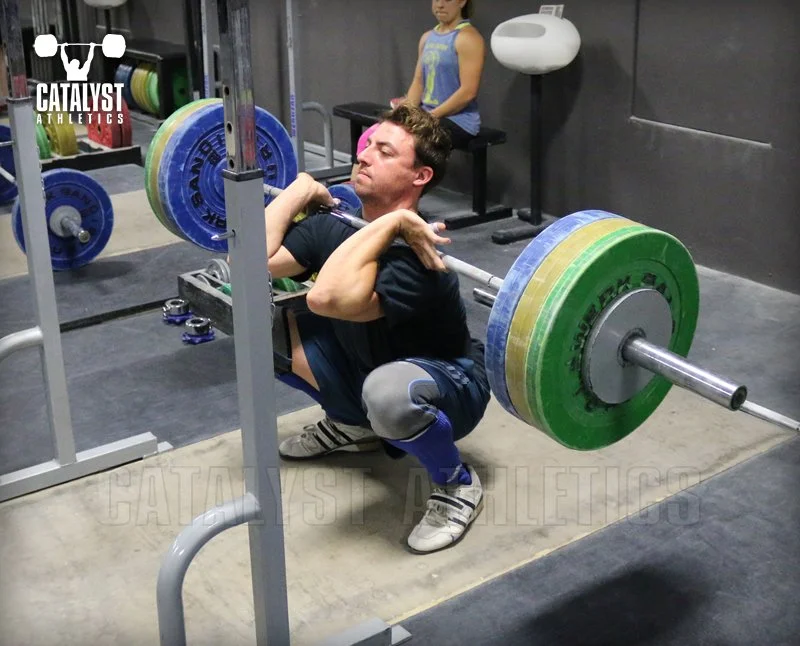
The front squat is the most quad dominant of the three variations. The bar moves from your back to the front of your body, sitting on the shelf created by your anterior deltoids. Your elbows come up and forward to create that shelf and keep the bar in position. The higher your elbows the more secure the bar stays.
Because the bar is now in front of you your torso has to stay significantly more upright than in either back squat variation. This is what makes the front squat so effective for quad development. Having the weight front loaded also demands significantly more from your core to keep your torso upright throughout the movement, making it one of the best squat variations for building core strength alongside lower body development. All the same breathing and bracing cues from the low bar apply here.
Your stance in the front squat can be slightly narrower than your back squat stance. Because it is a more quad dominant movement you do not need to create as much room for the hips to sit into the bottom position. The external rotation cue still applies. Feet slightly out, knees externally rotated, and sit into the movement.
Honorable Mention- Zercher Squat
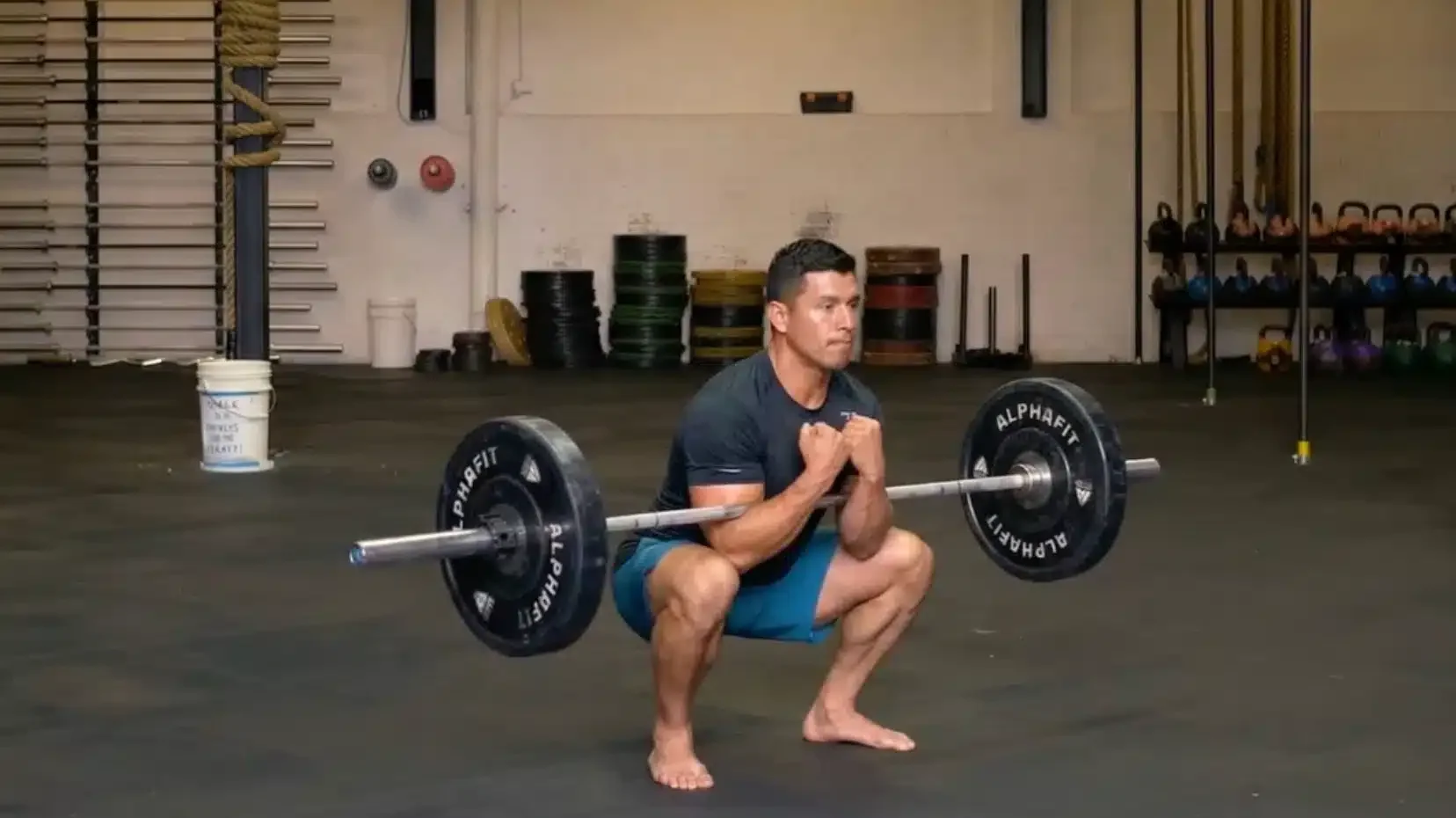
The Zercher Squat is one of my favorite squat variations. Instead of the bar sitting on your back or in a front rack position the bar sits in the crook of your elbows. You cradle it with your forearms and squat from there.
What makes the Zercher special is how front loaded it is. Similar to the front squat your torso has to stay upright but because the weight is held in your arms rather than resting on your shoulders your core has to work even harder to maintain that position. It is one of the best squat variations for developing core strength alongside lower body strength at the same time.
It also takes a significant amount of axial spine loading out of the equation. The weight is not pressing down through your spine the way it does in a back squat. For people who have back discomfort with barbell back squatting the Zercher is often a much more comfortable option.
Your setup is similar to the front squat. Feet slightly out, knees externally rotated, chest up, same breathing and bracing as always, and sit into the movement. The main cue to focus on is keeping your elbows up throughout the entire squat. The moment your elbows drop the bar starts to pull you forward and the whole lift falls apart.
The Zercher squat is also a fantastic alternative to the front squat for people who do not have the shoulder mobility to hold the front rack position properly. If getting into a front squat position is a struggle the Zercher removes that barrier entirely. Now the Zercher can be uncomfortable on your arms, but honestly the front squat is quite painful on the shoulders for a lot of people too. It really just comes down to which discomfort you would rather deal with.
A Final Note
Every squat variation follows the same foundation, even the ones we did not cover in this article. Find your stance, externally rotate, brace, and squat as deep as your mobility allows with a neutral pelvis. The bar position changes, the demand shifts slightly between variations, but the movement is always the same.
If you are brand new to squatting I want you to start with the goblet squat. Before we load your spine with a barbell we want to make sure your movement pattern is solid and your core is in a good place. The goblet squat teaches you everything you need, the stance, the external rotation, the depth, the bracing, without the added demands of a barbell on your back. Master that first and the rest will follow.
